Link-in-Bio or Full Website (How Creators Choose)
A practical guide to deciding between a link-in-bio page and a full website — and how they work together as you grow.
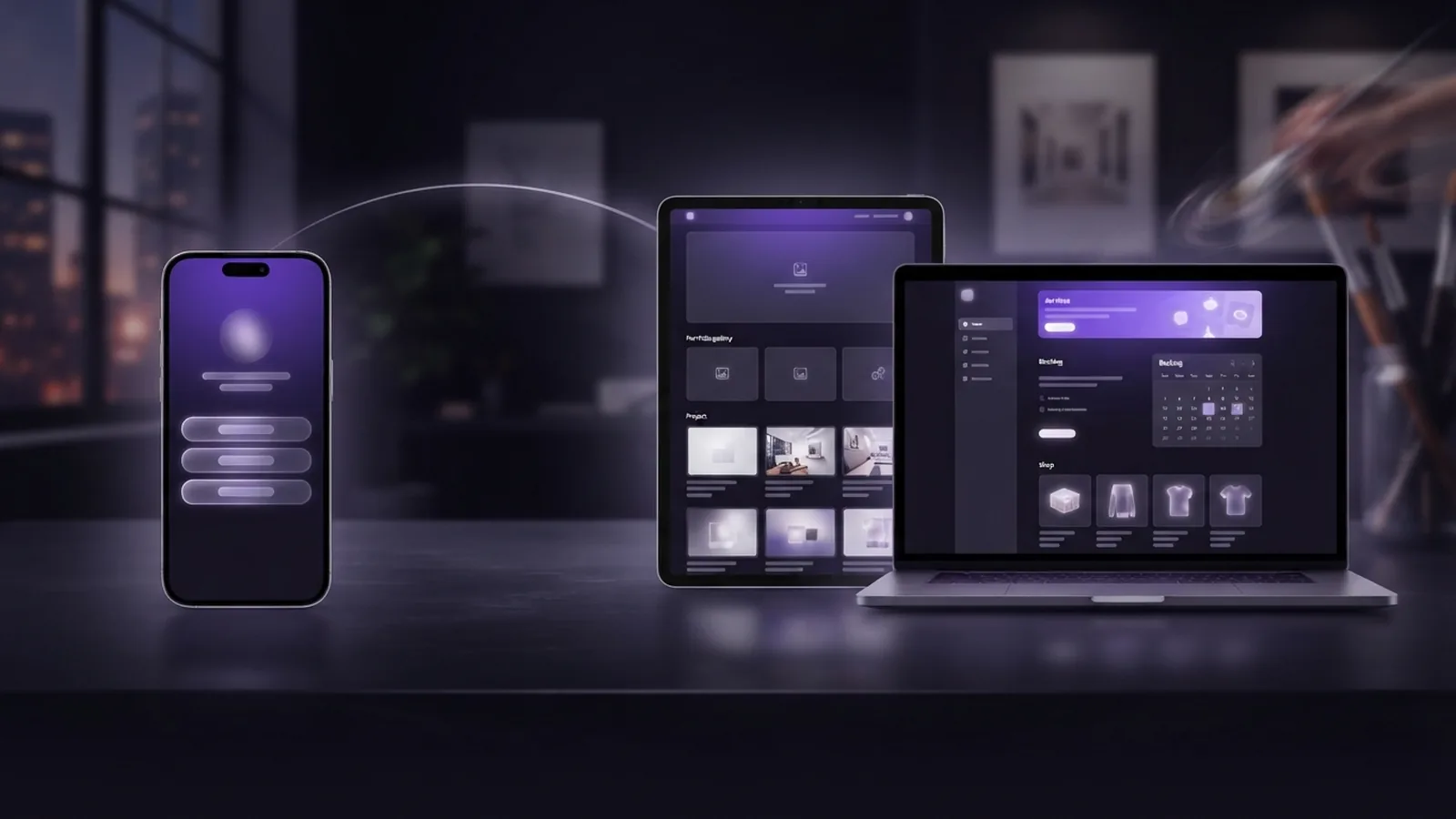
Every creator eventually asks the same question: is a link-in-bio page enough, or is it time for a full website? The honest answer is that it depends on where you are in your journey. A bio link and a website are not rivals. They solve different problems, and for most photographers, musicians, consultants and small creative businesses they end up working side by side. This guide walks you through how to decide, what the signals are, and how to grow without throwing away the simple page that already works for you.
When a link-in-bio page is enough
A link-in-bio page is often the right first home for your work. If your audience mostly finds you on Instagram, TikTok or YouTube, a single tidy page that gathers your most important links is fast to set up and easy to keep current. It is enough when your goals are simple: point followers to your latest release, your shop, your booking form or your newsletter, and update those links whenever your priorities change.
For people in an early or exploratory phase, this simplicity is a feature, not a limitation. You spend your energy making work and posting it, not maintaining pages. If a bio link answers "where do I send people next?" without friction, you do not need more yet.
Signs you have outgrown it
Growth shows up as friction. You start to feel the limits of a bio link when you have more to say than a list of buttons can hold. Common signals include wanting to explain your services in depth, needing several landing pages for different offers, collecting testimonials you have nowhere to display, or repeatedly answering the same detailed questions in DMs because there is no page to point to.
Another sign is audience source. If people increasingly discover you through search, referrals or press rather than a single social feed, a one-screen page can no longer carry the weight of that interest.
Portfolio depth and service pages
This is where many creators feel the pinch first. A link-in-bio page can showcase a handful of highlights, but it is not built for a deep, browsable portfolio or for structured service pages. If clients need to see categories of work, read detailed case descriptions, or compare packages before they enquire, you want dedicated pages with room to breathe.
A website lets you organise work by type, tell the story behind each project, and give each service its own page with clear scope and pricing context. That depth builds trust in a way a stack of buttons cannot.
Search visibility and content ownership
Social platforms and hosted bio pages are borrowed ground. A website you control is discoverable ground you own. If you want people to find you through search — not just through a profile they already follow — a proper site with its own pages, headings and content gives search engines something to index and rank. Google's own guidance in the Google Search Essentials explains what makes pages eligible to appear in results, and most of it assumes you have real, crawlable pages of your own rather than a single redirecting link.
Ownership matters beyond rankings, too. Articles, guides and portfolio pieces published on your own site are assets you keep even if a platform changes its rules or an algorithm shifts. That accumulated content is hard to build on a page you rent.
Booking, lead capture, shops and payments
Think about the action you most want a visitor to take. Many link-in-bio tools now handle booking links, simple lead forms, tip jars and product links well, and for a lot of creators that is genuinely enough to turn a follower into a paying client. You may not need a website to start selling.
The tipping point comes when your commerce gets more complex: a real catalogue, variants and inventory, gated content, memberships, or checkout flows and lead nurturing that need their own logic. When the money side outgrows a few buttons, a website — or a website working alongside your bio page — gives you the room and control those flows require.
Brand consistency
Your presence should feel like one person or one studio wherever someone meets it. A good bio link lets you match colours, fonts and imagery to your identity, which is often plenty in the early stages. As you add more surfaces — a portfolio, a shop, a blog — keeping them visually and tonally aligned becomes harder, and a website gives you a single controlled place to define how your brand looks and sounds. The bio page then becomes a consistent entry point into that world rather than the whole of it.
Accessibility and mobile usability
Most of your visitors arrive on a phone, so mobile usability is not optional. Bio link pages are mobile-first by default, which is one of their quiet strengths. Whatever you build, accessibility should be part of the plan from the start: legible contrast, real text rather than text baked into images, descriptive links, and controls that work with a keyboard and a screen reader. The Web Content Accessibility Guidelines (WCAG) 2.2 are the practical reference here, and they apply just as much to a simple bio page as to a full site. Designing to them widens your audience and tends to make everything clearer for everyone.
Analytics and conversion paths
You cannot improve what you cannot see. Bio link tools usually show which links get tapped, which is a useful first layer: you learn what your audience actually wants. A website adds depth — where visitors enter, how they move between pages, and where they drop off before booking or buying. If you are trying to design a deliberate path from discovery to enquiry to sale, that richer view helps you find and fix the weak step instead of guessing.
Domain ownership
A custom domain is one of the most underrated moves a creator can make, and you do not need a full website to claim one. Owning yourname.com means your address is yours: you can point it at a bio page today and at a website later without asking your audience to relearn where to find you. It also reads as more credible in a bio, an email signature or a pitch. Buy the domain early, even if all it points to for now is your simple link page.
When to bring in web and brand specialists
At some point the work of building and running a proper website exceeds what you want to do yourself, and that is a reasonable moment to bring in help. Studios such as Navicore are one example of an external web and brand studio a creator might evaluate once they have decided they genuinely need a custom site, alongside freelancers and other agencies you would compare on portfolio, process and price. Treat it as you would any hire: look at whether their previous work matches the outcome you want, and be clear about what you need before you commit. There is no single right partner, only the one that fits your stage and budget.
A gradual transition that keeps your bio page active
Moving to a website is not a switch you flip overnight, and you should not turn off what already works. The calmest path is additive. Keep your link-in-bio page live and current, buy your domain, then build your website one piece at a time — perhaps the portfolio first, then service pages, then a shop. Point your bio page's buttons at the new pages as they go live, so the two reinforce each other. Your bio link stays the fast, social-friendly front door; your website becomes the deeper space behind it. Nothing breaks, and your audience is never sent to a dead end.
A practical decision checklist
Run through these questions. The more you answer "yes," the more a website will earn its place beside your bio page.
- Do you need to show a deep portfolio or several distinct service pages?
- Do you want people to find you through search, not only through social profiles?
- Is your selling outgrowing simple buttons — catalogue, memberships, complex checkout?
- Do you need richer analytics to improve a real conversion path?
- Do you want long-term content you own and control on your own domain?
- Are you ready to maintain more surfaces, or to bring in help to do it?
If most answers are "no," your bio link is doing its job — stay lean. If most are "yes," start the gradual transition above. And remember the framing that matters most: this is rarely link-in-bio or website. For most creators it is a bio page first, a website when the work demands it, and, before long, both working together — each doing what it does best.
Frequently asked questions
- Is a link-in-bio page enough on its own?
- Often, yes. If your audience finds you on social platforms and your goals are simple — sending people to a release, shop, booking form or newsletter — a well-kept bio link does the job without the upkeep of a full site.
- How do I know I've outgrown my link-in-bio page?
- The clearest sign is friction: you want to explain services in depth, show a real portfolio, run more complex sales, or you keep answering the same detailed questions because there is no page to point to.
- Do I need a website to be found on Google?
- A site of your own gives search engines real, crawlable pages to index, which a single redirecting bio link cannot. If discovery through search matters to you, a website makes a big difference.
- Should I turn off my bio link once I have a website?
- No. Keep it live as your fast, social-friendly front door and point its buttons at your new pages. The two reinforce each other rather than competing.
- Do I need a website before buying a domain?
- No. Buy your domain early and point it at your bio page for now. Owning your address means you can move to a website later without asking your audience to relearn where to find you.
Related reading
How to Create an Instagram Bio That Feels Like You
Write an Instagram bio that feels personal, clear, and worth following.
How to Add a Custom Link to Your TikTok Bio
Add a website link to your TikTok profile or use smart workarounds.
How Do You Clean a Bio Ionic Smart X Blow Dryer?
Clean the filter and dryer body safely to keep airflow strong and steady.